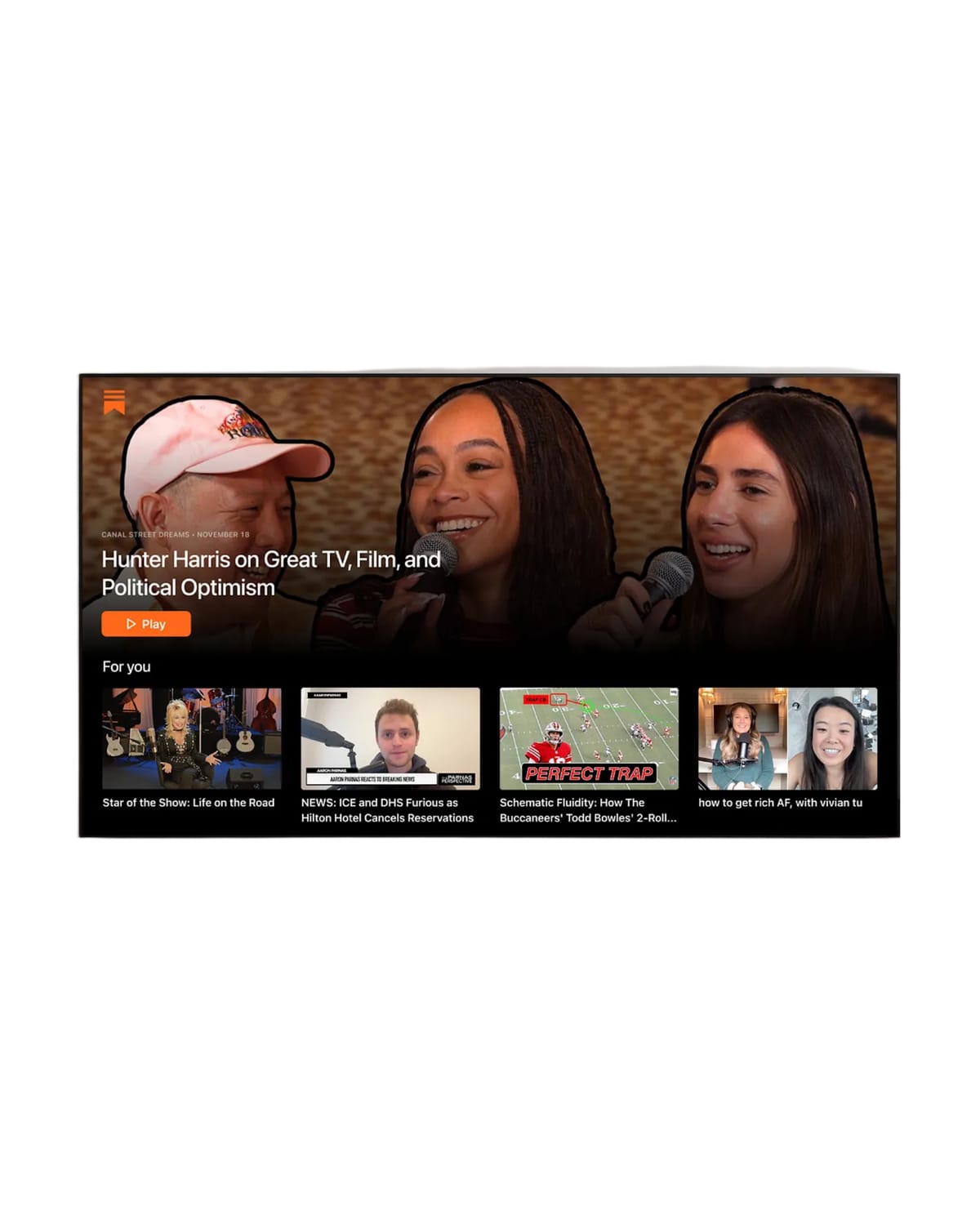
Newsletter publishing platform Substack today launched television applications for Apple TV and Google TV, expanding its multimedia capabilities as the company continues moving away from its founding identity as a home for written content. The announcement marks another step in the platform's transformation from text-focused newsletter service into what competing platforms characterize as a social media ecosystem.
According to Substack's announcement posted January 22, 2026, the television applications provide subscribers with access to video content and livestreams from publications they follow. The company emphasized that creators publishing video content face no additional requirements, as existing videos automatically become available for subscribers signed into the TV applications.
The timing follows Substack's pattern of rapid feature expansion throughout 2025. The platform raised $100 million in Series C funding on July 17, 2025, valuing the company at $1.1 billion while signaling a strategic pivot toward advertising integration. Mobile video publishing capabilities launched on February 20, 2025, enabling creators to upload videos up to 20 gigabytes directly from mobile devices for the first time.
The television applications focus on viewing reliability rather than comprehensive feature sets. Subscribers can watch video posts and livestreams from their subscriptions, browse recommended content through a "For You" section, and access dedicated pages for individual publications to explore additional videos. Both free and paid subscribers can sign in, with viewing access matching their current subscription level on each publication.
Paid content previews for free subscribers remain unavailable in this initial release. Substack indicated plans to add this functionality in future updates alongside additional features including audio posts, search capabilities, in-app paid subscription upgrades, and section organization for publications hosting multiple shows.
The development positions Substack's video offerings for living room consumption environments. Connected television's share of media budgets doubled from 14 percent in 2023 to 28 percent in 2025, according to measurement industry data. Streaming platforms have fundamentally reshaped advertiser approaches to campaign planning and audience targeting as traditional television viewership continues declining.
Installation requires searching device app stores for "Substack," downloading the application, opening it on television screens, and scanning a displayed QR code or entering a URL manually to complete authentication. The system works on Apple TV devices accessing the Apple App Store and Google TV or Android TV devices using the Apps section.
Several high-profile creators expressed support for the television app launch. Jim Acosta, veteran journalist and former CNN anchor who uses Substack's live video feature for daily news programming, described the development as "a game-changing moment for the rise of independent media." Chris Cillizza, author of So What and frequent on-air contributor, characterized the approach as meeting audiences where they choose to consume content.
The announcement highlighted video content from established personalities including Dolly Parton, George Saunders, and Tina Brown as examples of the "thought-provoking videos and livestreams" now accessible through television interfaces. This emphasis on celebrity creators aligns with concerns raised by smaller independent publishers about platform direction favoring existing large audiences over emerging voices.
User responses to the announcement revealed substantial opposition from Substack's creator community. Multiple commenters expressed concerns that the television app represents abandonment of the platform's founding mission as a space dedicated to written content. The announcement post accumulated over 1,400 comments, with top-rated responses questioning the strategic direction and demanding renewed focus on writing tools rather than multimedia features.
"Please don't do this. This is not Youtube. Elevate the written word," wrote one commenter whose response received 454 likes. Another highly-rated comment stated: "I came to Substack because it was a good place for writers. I understand that the money is where the influencers are and you are trying to entice them here from other SM sites. But meanwhile, a lot of people here still write. Where is the improved functionality for writers?"
Several creators indicated plans to explore alternative platforms. Multiple comments referenced Beehiiv, a competing newsletter service that expanded beyond newsletters with digital products and zero-commission features on November 13, 2025. Ghost received mentions as another potential destination for writers seeking text-focused publishing environments.
The criticism echoes previous creator backlash against Substack's feature expansion strategy. When the platform enabled iOS in-app purchases on August 18, 2025, creators objected to mandatory participation and reduced control over pricing structures. Similar concerns emerged when Substack introduced Notes, its Twitter-like social feature, which writers characterized as diluting the platform's identity and adding unwanted distractions.
Substack's market position reflects tension between growth objectives and creator preferences. The platform captured 41 percent of newsletter submissions to industry tracker InboxReads in 2025, maintaining dominance over Beehiiv's 29 percent market share. However, newsletter monetization research published in December 2025 showed paid subscription adoption remained flat at just 2 percent of submissions, identical to 2024 figures.
That subscription challenge drives Substack's advertising exploration and multimedia expansion. Co-founder Hamish McKenzie, who previously criticized advertising models as "busted," acknowledged in July 2025 that the company's embrace of advertising represents "a recognition of new possibilities" enabled by network growth. Mike Kerns, co-founder of The Chernin Group, explained to The New York Times that creators requested advertising support from the platform.
The television app's technical infrastructure leverages Substack's existing video capabilities. Creators who publish video content through the platform's mobile or desktop interfaces see their work automatically appear in the TV applications without additional steps. The system maintains subscription access controls, ensuring free subscribers cannot access paid video content beyond what creators have designated as publicly available.
Platform comparison reveals Substack entering competitive territory dominated by established services. YouTube maintains overwhelming market leadership in video content distribution, while streaming platforms including Netflix, Amazon Prime Video, and Disney+ control premium television-length programming. Substack's approach positions creator-driven video content as distinct from both short-form social video and traditional television production.
The announcement did not address Roku compatibility, despite Roku's significant market presence in connected television devices. Multiple commenters questioned this omission, noting that many households rely on Roku devices rather than Apple TV or Google TV systems. Substack staff responses indicated the initial launch supports only Apple TV and Google TV platforms, without committing to Roku availability timelines.
Technical limitations in the initial release exclude several features present in Substack's mobile and web applications. The television app lacks search functionality, which becomes increasingly important as video catalogs expand across thousands of publications. Discovery mechanisms rely on subscription relationships and algorithmic recommendations through the "For You" section rather than keyword-based content exploration.
The competitive landscape includes WordPress unveiling enhanced newsletter features on May 15, 2025, positioning itself as a direct Substack competitor with transaction fees ranging from 10 percent on free plans down to 0 percent on the Commerce plan. WordPress's global reach powering 43 percent of websites provides substantial infrastructure advantages and existing audience relationships.
Newsletter advertising infrastructure development accelerated throughout 2025. Beehiiv doubled its ad sales team on January 8, 2026, bringing in LiveIntent veteran Andrew MacMannis as Vice President of Ad Sales and Customer Success. The platform pays out over $1 million monthly to publishers through its Ad Network, demonstrating significant monetization activity beyond subscription models.
Market data shows sponsored content surpassed paid subscriptions as the dominant revenue model for email newsletters in 2025. According to industry tracking, 77 percent of new publications seek advertising partnerships compared to just 2 percent operating paywalls. This shift validates Substack's strategic pivot toward advertising integration despite creator concerns about maintaining editorial independence.
The television app's advertising implications remain unclear. Substack has not announced specific plans for advertising integration within the TV applications, though the connected television environment typically commands premium advertising rates compared to mobile or web inventory. Video advertising formats including pre-roll, mid-roll, and pause ads have become standard across streaming platforms as evidenced by Magnite's pause advertising expansion on August 26, 2025.
Creator monetization through video has shown stronger results than text-only approaches according to Substack's data. The platform reports creators using multimedia content including video and audio grow revenue 2.5 times faster than text-only publishers. This performance differential creates economic incentives for creators to adopt video formats regardless of audience preferences for written content.
The development occurs as streaming consumption continues fragmenting across multiple services. Average American households accessed 4.2 streaming applications during the second quarter of 2025, with YouTube leading time spent at 21 percent of total streaming consumption. Substack enters this environment without exclusive content arrangements or substantial programming budgets that typically differentiate streaming services.
Platform features promised for future releases include read-aloud functionality, which Substack staff mentioned repeatedly in response to creator concerns about video focus. However, read-aloud capabilities differ substantially from native reading experiences, potentially serving as inadequate compromise for writers seeking improved text presentation rather than audio conversion alternatives.
The announcement's emphasis on "longform" content applies primarily to video duration rather than written depth. Substack positioned the television app as appropriate for "extended viewing that great video deserves," suggesting a focus on longer-format video content rather than short-form social media clips. This approach differentiates Substack's video strategy from TikTok or Instagram Reels while still competing for attention with YouTube's dominant long-form video platform.
International availability details remain unspecified in the announcement. Apple TV and Google TV platforms operate globally, but Substack's actual application availability may vary by region based on licensing considerations, payment processing capabilities, and regulatory requirements. The company's previous iOS in-app purchase implementation restricted certain features to United States users while mandating different purchasing flows for international subscribers.
The marketing community implications center on creator economy dynamics and platform consolidation trends. Substack's television app represents another instance of specialized platforms expanding beyond their original niches toward all-in-one service offerings. Similar patterns have emerged across social media platforms, with Instagram adding shopping features, TikTok developing search capabilities, and LinkedIn emphasizing video content.
Creator retention challenges may intensify as platform identity shifts away from writing-focused positioning. Multiple highly-engaged creators expressed immediate plans to explore alternatives in comment threads, suggesting Substack risks losing its most vocal community members. However, actual migration patterns may differ from comment sentiment, as platform switching involves substantial effort including subscriber list exports, content migration, and audience communication.
The announcement generated 716 shares and 1,401 likes alongside the extensive critical commentary, indicating mixed reception rather than uniform opposition. Some creators and subscribers expressed interest in television app access for video content they already consume through other devices. This division within the community reflects broader tensions about platform direction and creator needs.
Platform development resources allocated to television applications represent opportunity costs for other feature requests. Writers have consistently requested improved text editing capabilities, better serialization support for fiction, enhanced typography options, and more flexible formatting controls. The television app's development suggests Substack prioritizes video infrastructure over these writing-focused improvements despite user feedback.
Timeline
- 2017: Substack launches as dedicated newsletter platform, eventually serving 50,000+ publishers
- November 2019: Apple TV+ streaming service launches, establishing Apple's video content distribution infrastructure
- January 28, 2023: Substack introduces private newsletters with invite-only functionality
- May 15, 2025: WordPress unveils enhanced newsletter features to rival Substack, introducing competitive pricing structures
- July 17, 2025: Substack raises $100 million in Series C funding while exploring advertising integration, valuing platform at $1.1 billion
- August 18, 2025: Substack enables iOS in-app purchases with automatic price adjustments to offset Apple's commission
- November 13, 2025: Beehiiv expands beyond newsletters with digital products marketplace and zero-commission commerce
- December 28, 2025: Newsletter monetization shifts toward sponsorships as 77% of publications seek advertising partnerships
- January 8, 2026: Beehiiv doubles ad sales team as newsletter advertising adoption accelerates
- January 22, 2026: Substack launches TV apps for Apple TV and Google TV with automatic video content integration
- January 22, 2026: Newsletter ad spending surges 40% as brands seek alternatives to walled garden platforms
Summary
Who: Substack, led by co-founders Chris Best, Hamish McKenzie, and Jairaj Sethi, announced the television application launch. The development affects newsletter creators publishing video content, subscribers consuming that content, and competing platforms including Beehiiv and WordPress in the newsletter publishing market.
What: Substack released television applications for Apple TV and Google TV platforms, providing subscribers with access to video posts and livestreams from publications they follow. The applications automatically include video content from more than 30,000 publications without requiring creator action, featuring basic viewing functionality including subscription-based content, "For You" recommendations, and publication-specific video pages. Future updates will add audio posts, search capabilities, paid content previews for free subscribers, in-app subscription upgrades, and section organization for multi-show publications.
When: The announcement occurred on January 22, 2026, with the applications immediately available for download through Apple App Store for Apple TV devices and Google Play Apps section for Google TV and Android TV devices. The launch follows Substack's $100 million funding round on July 17, 2025 and mobile video publishing capabilities introduced on February 20, 2025.
Where: The television applications operate on Apple TV and Google TV platforms globally where those systems are available. Roku compatibility remains absent from the initial release despite the platform's significant connected television market presence. Installation requires searching device app stores, downloading the Substack application, and completing authentication through QR code scanning or manual URL entry.
Why: The television app expansion advances Substack's strategic pivot toward multimedia content and advertising monetization following platform data showing video creators grow revenue 2.5 times faster than text-only publishers. Connected television's advertising market doubled its share of media budgets from 14 percent in 2023 to 28 percent in 2025, creating economic incentives for platforms to establish television distribution capabilities. The development addresses creator requests for reaching audiences across multiple consumption contexts while positioning Substack to capture premium video advertising inventory as the platform implements its advertising integration strategy announced alongside July 2025 funding.
Share this article
The link has been copied!