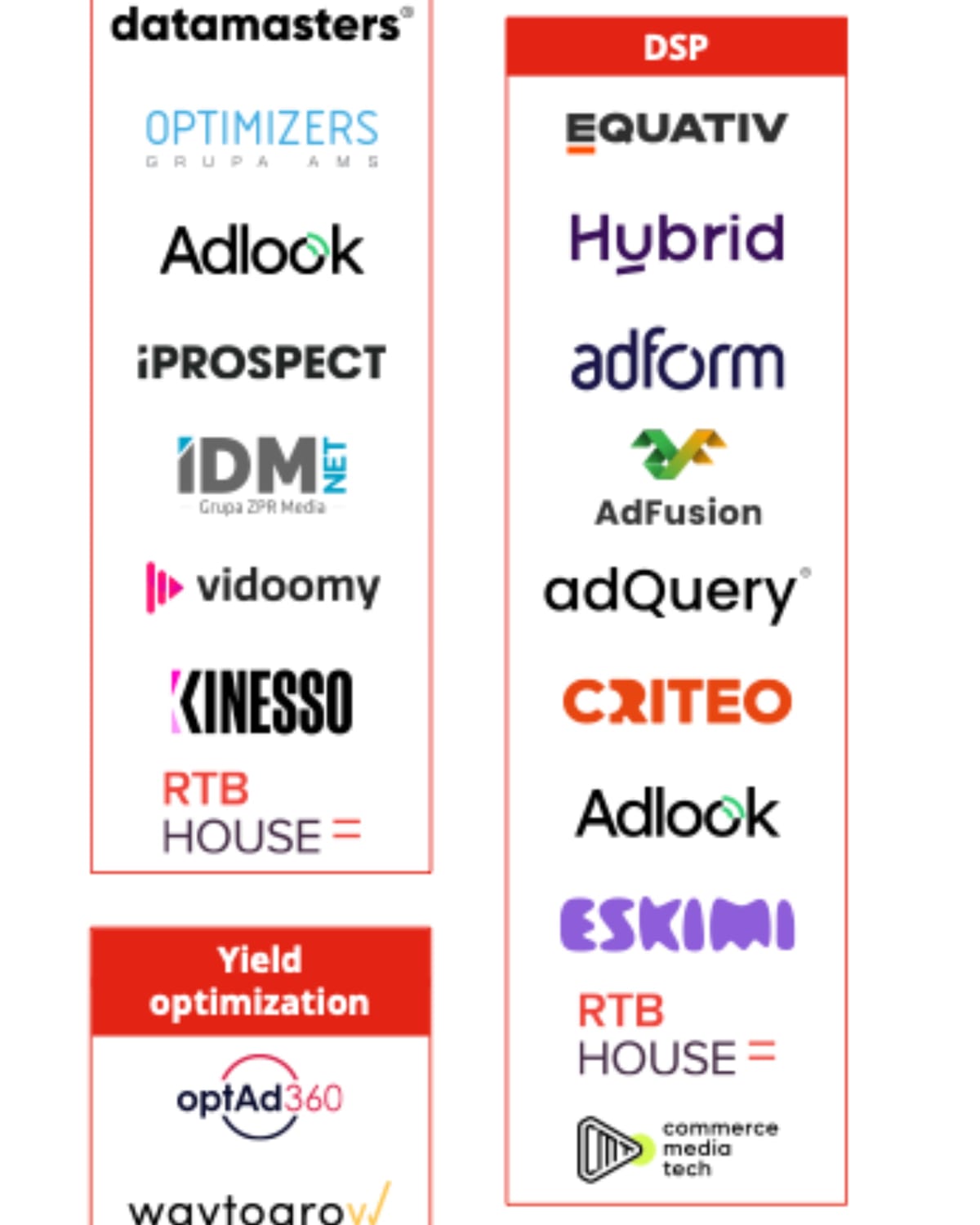
IAB Poland this week released the Interactive Industry Map 2026, cataloging over 400 companies operating in Poland's digital advertising ecosystem across nine thematic areas and 55 distinct market categories. The comprehensive resource, available as both an interactive PDF and searchable online platform at map.iab.org.pl, addresses navigation challenges within what Włodzimierz Schmidt, President of the Board of IAB Poland, characterized as "the increasingly complex world of the Internet industry."
According to the announcement on January 20, 2026, the map provides Polish marketing professionals with structured access to verified business partners across the complete marketing workflow - from initial campaign creation through final sales execution. The project builds on previous editions while introducing enhanced functionality designed to increase market transparency and facilitate informed partner selection in digital advertising.
The organizational structure divides Poland's digital advertising sector into nine primary areas. Creation and Implementation encompasses agencies handling 360-degree campaigns, content marketing, e-mail marketing, social media, creative work, mobile marketing, SEM/SEO/SXO, performance marketing, event management, and public relations. Programmatic includes agencies specializing in programmatic advertising, demand-side platforms, supply-side platforms, ad servers, trading desks, AI-powered advertising technology, and yield optimization services.
Tools represent analytical and data-driven capabilities spanning analytics platforms, data providers, research firms, marketing automation systems, monitoring services, artificial intelligence applications, and additional advertising technology infrastructure. Advertising Space covers the inventory side of the ecosystem, featuring horizontal portals and websites, audio/video advertising networks, vertical specialty sites, internet television and video-on-demand platforms, search engines, retail media networks, affiliate networks, online communities, and advertising networks. E-commerce addresses online retail infrastructure through online stores, e-commerce platforms, comparison shopping engines, and specialized e-commerce agencies.
Analyses encompasses measurement and intelligence capabilities through companies providing campaign monitoring, analytics solutions, data management, and technological measurement tools. Services includes supporting infrastructure spanning digital advisory firms, education providers, training and certification programs, internet service providers, recruitment and outsourcing services, and B2B legal advisory. Education represents academic institutions, training providers, and certification bodies. Digital Ambassadors highlights influential figures and thought leaders within Poland's digital marketing community.
The Interactive Industry Map functions through dual access methods. The PDF format provides visual overview capabilities, displaying all participating companies organized by sector with graphical representation of market structure. According to the announcement materials, the interactive PDF enables users to comprehend market scope and brand positioning within the competitive landscape. The online service at map.iab.org.pl incorporates search functionality enabling users to locate specific services, filter by market category, and identify suppliers matching particular requirements.
Market segmentation within the map reflects Poland's strong programmatic adoption, which demonstrates greater growth opportunities compared to more mature Western European markets. IAB Europe's 2024 AdEx Benchmark Report indicated Poland achieved 19.6% growth in constant currency terms, positioning it among the fastest-growing markets alongside Serbia and Ukraine. This expansion creates increased demand for comprehensive market intelligence as companies seek partners across expanding digital advertising capabilities.
The map addresses specific operational challenges facing Polish marketing organizations. Companies requiring campaign execution partners must evaluate numerous options across multiple specializations without standardized information sources. The centralized directory consolidates this intelligence, reducing research time and enabling more informed vendor selection. For service providers, the map increases visibility within a crowded marketplace while establishing credibility through IAB Poland association.
Participation in the Interactive Industry Map carries what the organization characterizes as prestige and credibility confirmation for companies operating across e-marketing communication, e-commerce, technologies, data analysis, and online business support services. The selection criteria and verification processes determine which companies achieve inclusion, though specific requirements were not detailed in the announcement materials.
The broader context of IAB Poland's activities demonstrates the organization's systematic approach to supporting Polish digital advertising development. In January 2026, IAB Polska released AI Guide 2.0, a 300-page resource examining artificial intelligence applications across e-marketing and business operations. The guide addresses professionals at multiple experience levels, from foundational AI concepts through advanced technical frameworks including large language models and AI agent architecture.
Polish advertising industry initiatives have focused on establishing measurement standards aligned with international frameworks while addressing local market requirements. IAB Polska, Stowarzyszenie Content Marketing Polska, and Polska Organizacja Reklamodawców established the Attention Measurement Standardization Group in September 2025, creating unified methodological frameworks for measuring attention in digital advertising. Research indicated over 80% of industry experts believe the market requires attention measurement standardization, while 93% confirm attention metrics directly impact marketing communication effectiveness.
The Polish television and streaming landscape provides additional context for digital advertising evolution. Nielsen data shows streaming captured 10.1% of total television viewing time in Poland during July 2025, marking a historic milestone for digital video consumption. Traditional television broadcasting maintained dominant position at 82.8% of Polish viewing time, suggesting a transitional period where audiences consume content across both established and emerging platforms.
AudienceProject's Q1 2026 product roadmap included Poland expansion, providing Polish advertisers with measurement capabilities comparable to established Western European markets. The Copenhagen-based measurement company's move into Poland reflects industry recognition that less mature markets demonstrate receptivity to sophisticated measurement implementation as programmatic capabilities expand.
IAB Poland operates as the Internet Industry Employers Union, maintaining offices at Puławska 39/77 in Warsaw. The organization serves as Poland's primary industry association for digital advertising, developing standards, conducting research, and providing resources supporting market development. Contact for Interactive Industry Map applications occurs through mapa@iab.org.pl.
The map's availability without charge addresses accessibility concerns for smaller companies and agencies seeking market intelligence. Free access eliminates financial barriers to participation in Poland's digital advertising ecosystem, potentially accelerating market development by ensuring comprehensive information availability regardless of company size or budget constraints.
Technical specifications for the Interactive Industry Map were not detailed in announcement materials. PDF file size, online platform infrastructure, search algorithm capabilities, and update frequency remain unspecified. These operational details affect usability for companies conducting regular market research and partner evaluation activities.
The relationship between the Interactive Industry Map and other IAB Poland initiatives demonstrates systematic market development approaches. The organization's attention measurement standardization, AI implementation guidance, and industry mapping collectively address different aspects of digital advertising maturation in Poland. This coordinated approach may accelerate market sophistication compared to organic development patterns.
Retail media expansion across European markets provides comparative context for understanding mapping initiatives. IAB Europe updated its retail and commerce media landscape map in October 2025, organizing hundreds of companies across eight distinct categories. European retail media spending reached €13.7 billion in 2024 with 21.1% growth, substantially outpacing the broader advertising market's 6.1% expansion. Standardization efforts through clear categorization enable more informed decision-making about technology partnerships and network selection.
The Interactive Industry Map 2026 represents the latest iteration of an ongoing project. Schmidt emphasized that "the project is constantly evolving: we are introducing new functionalities and amenities to still provide a practical tool that helps to navigate the world of Polish digital, while promoting it at the same time." This statement indicates planned enhancements beyond the current release, though specific roadmap details were not provided.
Geographic scope limitations affect the map's applicability for companies operating across multiple Central European markets. The resource addresses exclusively Polish operations, requiring companies with regional strategies to consult multiple national resources for comprehensive market intelligence. This fragmentation contrasts with pan-European resources developed by IAB Europe for categories like retail media and addressability solutions.
The timing of the January 2026 release positions the map for use in annual planning cycles and budget allocation decisions. Companies finalizing Q1 execution strategies and evaluating 2026 partnership arrangements can reference current market structures and available service providers. This timing optimization suggests strategic release planning aligned with industry planning rhythms.
Measurement capabilities and performance tracking represent critical gaps in the announcement materials. While the map identifies companies providing analytics and monitoring services, evaluation frameworks for assessing service provider quality remain absent. Marketing professionals must develop independent assessment methodologies beyond the categorization structures the map provides.
The Interactive Industry Map's structure reflects broader programmatic ecosystem development. Comscore's 2026 State of Programmatic Report revealed 82% of marketers now consider AI-powered optimization essential when evaluating partners, while 58% expect to increase programmatic investment in 2026. These patterns affect partner selection priorities as companies prioritize technical capabilities alongside traditional service delivery factors.
For agencies managing client portfolios, the map enables more systematic vendor research across multiple specializations. Rather than maintaining separate research processes for programmatic partners, analytics providers, and creative agencies, consolidated access streamlines evaluation workflows. This efficiency gain matters particularly for mid-sized agencies lacking dedicated procurement teams.
Publisher monetization strategies increasingly depend on understanding advertising technology infrastructure. The map's coverage of supply-side platforms, ad servers, and yield optimization services enables publishers to evaluate technology partners supporting revenue operations. Programmatic audio expansion through platforms like audioXi demonstrates how publishers leverage technology partnerships to access advertiser demand.
The Digital Ambassadors category introduces subjective elements into what otherwise functions as objective market cataloging. Identifying influential figures and thought leaders requires editorial judgment about authority, reach, and impact within the community. Selection criteria and evaluation methodologies for this category were not detailed in announcement materials.
International comparisons highlight differing approaches to industry mapping. IAB Tech Lab's Content Taxonomyprovides technical classification systems for advertising content rather than company directories. The January 2025 release of official mapping between Content Taxonomy 1.0 and 2.0 addressed standardization challenges across programmatic advertising infrastructure. These technical standards complement company directories by establishing common frameworks for describing advertising capabilities.
The map positions IAB Poland as central marketplace facilitator beyond its traditional standards development and advocacy roles. This expanded function raises questions about governance, independence, and potential conflicts of interest as the organization simultaneously represents industry interests while operating market intelligence resources. Transparency around inclusion criteria, verification processes, and relationship disclosure becomes essential for maintaining credibility.
Market dynamics affect map utility as companies enter, exit, and pivot within Poland's digital advertising sector. Static annual releases risk obsolescence as market conditions shift throughout the year. Online platform architecture enables dynamic updates, though update frequency and change notification mechanisms were not specified in announcement materials.
The Interactive Industry Map ultimately addresses information asymmetry challenges endemic to fragmented service markets. Buyers lack comprehensive visibility into available suppliers and their capabilities, while suppliers struggle to reach potential clients amid marketplace noise. Centralized directories reduce search costs for both parties, potentially improving market efficiency through better information distribution.
Timeline
Summary
Who: IAB Poland (Internet Industry Employers Union), led by Board President Włodzimierz Schmidt, created the Interactive Industry Map cataloging over 400 Polish companies operating across digital advertising, e-commerce, analytics, and supporting services. The resource targets marketing professionals, advertisers, agencies, and service providers seeking verified business partners within Poland's digital ecosystem.
What: The Interactive Industry Map 2026 represents a comprehensive directory organizing Polish digital advertising companies into nine thematic areas - Creation and Implementation, Programmatic, Tools, Advertising Space, E-commerce, Analyses, Services, Education, and Digital Ambassadors - spanning 55 distinct market categories. Available as both an interactive PDF and searchable online platform at map.iab.org.pl, the resource enables users to identify service providers, evaluate market structure, and research potential business partners across the complete marketing workflow.
When: Released January 20, 2026, the map represents the latest edition of an ongoing project that IAB Poland continuously updates with new functionalities. The timing positions the resource for use in annual planning cycles and Q1 2026 execution strategies as companies finalize partnership arrangements and budget allocations.
Where: The map addresses exclusively Polish digital advertising operations, cataloging companies operating within Poland's market across Warsaw and other major business centers. Accessible globally through map.iab.org.pl, the online platform enables international companies to research Polish market capabilities while supporting domestic companies in identifying local partners. The organizational structure reflects Poland's position as a fast-growing Central European market demonstrating 19.6% advertising growth and strong programmatic adoption.
Why: The Interactive Industry Map addresses navigation challenges within Poland's increasingly complex digital advertising ecosystem, where fragmented information about available services creates barriers to informed partner selection. By consolidating verified company information across 55 categories, the map reduces research time, increases market transparency, promotes healthy competition, and enables conscious vendor evaluation for e-marketing activities. The resource matters for marketing professionals because it provides essential market intelligence during a period of rapid digital advertising expansion in Poland, supporting more efficient partner identification across programmatic advertising, analytics, creative services, and supporting infrastructure.
Share this article
The link has been copied!