
Google just made invoice tracking bearable with new billing report
Google today launched a line-by-line billing report in Google Ads showing account, campaign, usage, and payment details to simplify cost reconciliation.

Google today launched a line-by-line billing report in Google Ads showing account, campaign, usage, and payment details to simplify cost reconciliation.
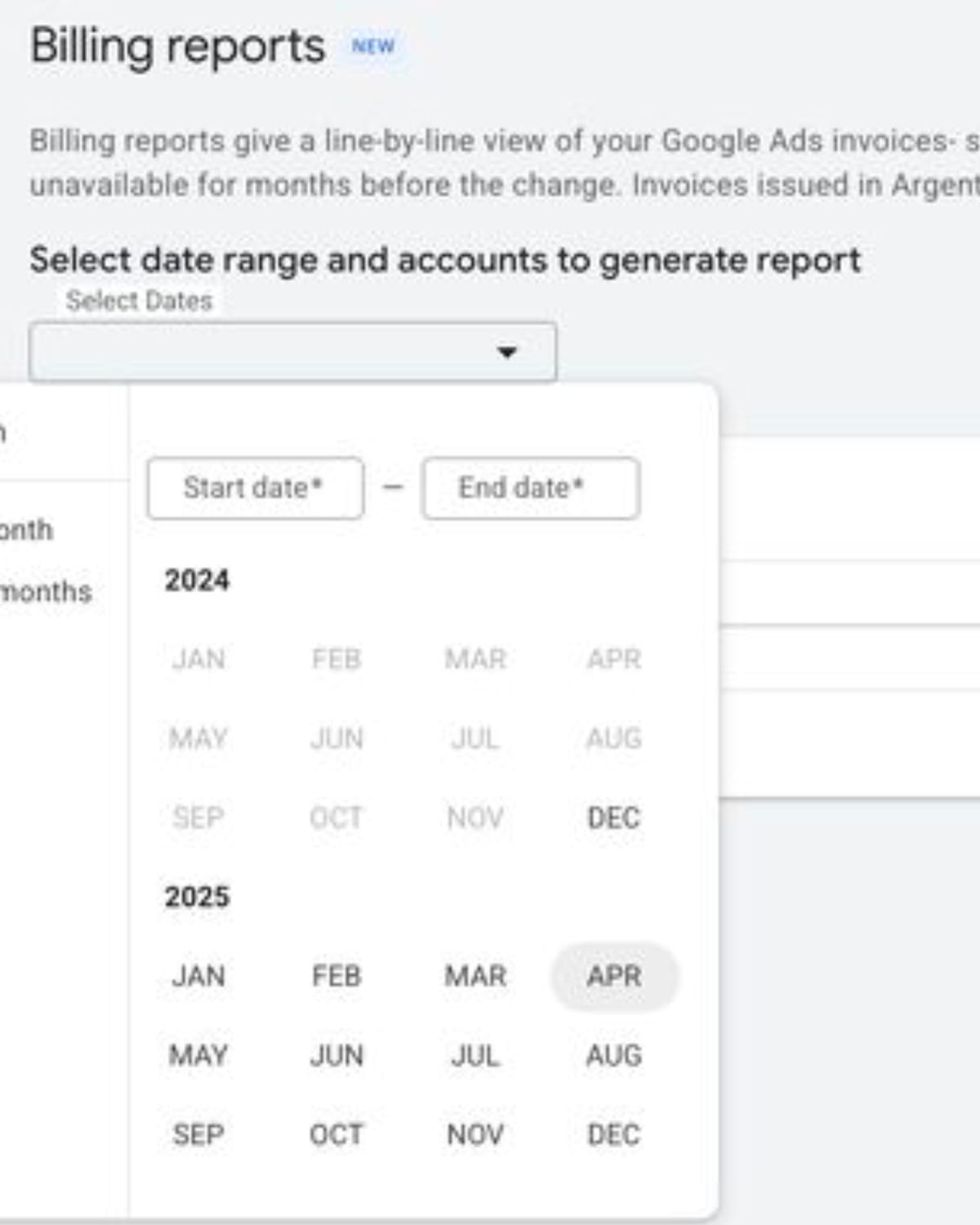
Google this month rolled out a new billing report feature within Google Ads, providing advertisers with a detailed, line-by-line breakdown of their invoices. The feature marks a significant shift in how advertisers track spending and reconcile costs with finance teams.
The new billing report, labeled with a "new" badge in the interface, appears in the left navigation menu under the billing section. It displays account information, campaign details, usage data, and payment information in a single, consolidated view. According to Arpan Banerjee, an AI-Driven PPC Specialist who first spotted the feature, the update "makes things simpler" for advertisers managing Google Ads accounts.
The report provides several key capabilities that address long-standing pain points in advertising financial management. Advertisers can access a line-by-line invoice breakdown that shows exactly where advertising spend occurred across campaigns. The interface includes date selection options with presets for custom ranges, the last month, or the last three months. Each line item displays the account ID and account type, enabling detailed analysis of spending patterns across complex account structures.
According to Banerjee's analysis posted on the professional networking platform, the feature addresses a fundamental challenge in digital advertising operations. "Less back-and-forth between finance and marketing teams," he noted, describing one of the primary benefits. Marketing departments historically struggled to provide finance teams with granular spending documentation that matched Google's invoicing format, creating reconciliation challenges and delaying payment processing.
The billing report becomes particularly valuable for advertisers who underwent "Change who pays" updates in their accounts. Google notes that billing data may be unavailable for months before such changes occurred. This limitation reflects technical constraints in how the platform tracks payment responsibility transitions across different billing profiles. Advertisers should verify historical data availability when conducting retrospective analyses that span payment profile changes.
The feature's interface design prioritizes accessibility for users who may not regularly interact with detailed billing data. A search functionality allows quick filtering by specific account identifiers. The expandable calendar view for date selection displays months in grid format, enabling precise range specification for reporting periods. The system displays account types clearly, distinguishing between standard Ads accounts and other configurations that may appear in manager account hierarchies.
For large advertisers operating dozens or hundreds of campaigns across multiple accounts, the new billing report eliminates manual invoice parsing. Previously, matching campaign-level spend to invoice line items required exporting data from multiple reporting interfaces and cross-referencing with billing statements. Finance teams frequently requested additional documentation to verify that invoiced amounts corresponded to actual campaign activity.
The billing report addresses these workflow inefficiencies through its consolidated presentation. Each line item connects campaign activity to invoiced charges, enabling direct verification without supplementary documentation. This transparency proves particularly valuable during budget reviews, variance analyses, and compliance audits where finance teams require detailed spend attribution.
Invoice reconciliation challenges have intensified as Google introduced country-specific surcharges throughout 2024 and 2025. The Canada DST Fee, Austria regulatory operating costs, and similar charges appear as separate invoice line items requiring explanation to finance departments. The new billing report's detailed breakdown helps advertisers identify these surcharges and explain their calculation to internal stakeholders.
The feature arrives as Google continues expanding its billing and payment transparency initiatives. The company announced payer name identification updates in May 2025, requiring clearer disclosure of which entities actually fund advertisements. Those changes addressed confusion about whether agencies or clients appeared as payers in the Ads Transparency Center. The billing report complements this transparency push by showing payment profiles and billing relationships within advertiser accounts.
Multiple account configurations benefit from the consolidated reporting approach. Manager accounts overseeing numerous client accounts can view billing data across their managed portfolio. Advertisers using monthly invoicing see their payment schedule and threshold amounts alongside campaign spending. Those on automatic payments can review how their billing cycles correspond to campaign activity patterns.
The billing report also supports verification of invalid traffic credits, which Google applies when it detects fraudulent clicks or impressions. According to the About the Billing Summary page documentation, advertisers "may view more than one line for invalid traffic credits if they correspond to different months of service." The detailed breakdown enables tracking these adjustments across reporting periods.
Google's approach to billing and payment features has evolved substantially in recent years. The company suspended credit card billing for specific advertiser segments in June 2024, pushing those accounts toward monthly invoicing or direct debit. That transition created confusion among affected advertisers who needed to understand new payment structures and billing cycles. The billing report's clear presentation of payment methods and billing events addresses some of that confusion.
For advertisers in countries with promotional credit programs, the billing report shows how credits are applied against campaign costs. The interface distinguishes between standard billing charges, promotional credit usage, and net amounts due. This separation proves essential for advertisers tracking the effectiveness of promotional offers and planning for when credits expire.
The feature's availability extends to accounts using both automatic and manual payment settings. Automatic payment accounts see their threshold amounts and scheduled payment dates alongside spending data. Manual payment accounts view their prepayment amounts and how those funds are allocated across campaigns. Both configurations benefit from the line-by-line clarity that shows exact fund usage patterns.
Tax and fee calculations represent another area where the billing report provides necessary transparency. According to Google's documentation, "Final taxes and fees are calculated at the end of the month," but the report shows estimated amounts throughout billing periods. For countries with value-added tax, goods and services tax, or other consumption taxes, the detailed breakdown shows pre-tax campaign costs separately from tax calculations.
The interface design accommodates both high-frequency and occasional users. Finance teams conducting monthly reconciliation can quickly verify invoice accuracy without learning complex reporting interfaces. Marketing managers reviewing spending patterns can drill down into specific accounts or campaigns. Executives seeking high-level budget compliance confirmation can view summary data without navigating through detailed campaign metrics.
Currency handling becomes less complex through the billing report's presentation. For advertisers operating across multiple countries with different billing currencies, the report displays amounts in the billing currency associated with each account. This prevents confusion about exchange rate applications and shows exactly what will appear on payment processor statements.
The feature complements existing Google Ads reporting capabilities that focus on campaign performance rather than financial reconciliation. While standard reports show clicks, impressions, conversions, and other performance metrics, the billing report specifically addresses accounting requirements. This separation acknowledges that financial management and campaign optimization require different data presentations.
Data export functionality enables integration with external accounting systems. Advertisers using enterprise resource planning software or custom financial management tools can export billing report data for automated reconciliation processes. This capability matters particularly for large organizations where multiple stakeholders across departments need access to advertising spend documentation.
The billing report's launch timing coincides with increased regulatory scrutiny of digital advertising practices. The European Union's Digital Markets Act, implemented throughout 2024 and 2025, requires greater transparency in advertising pricing and fee structures. Google's enhanced billing documentation helps advertisers comply with these transparency requirements when reporting advertising expenditures to auditors or regulators.
For advertising agencies managing client accounts, the billing report facilitates client reporting obligations. Agencies can demonstrate exactly how client funds were allocated across campaigns and verify that invoiced amounts match actual spending. This transparency strengthens client relationships by eliminating questions about spending accuracy or fund allocation.
The feature addresses a specific market need that Banerjee identified in his LinkedIn post analysis. "Helps match spend with invoices faster," he noted, describing how the report streamlines verification processes that previously required manual calculation. The time savings accumulate significantly for organizations reconciling multiple accounts monthly.
Data retention appears to follow Google's standard billing documentation policies. The Billing Summary page documentation indicates that documents typically become available "by the 5th business day of the month" for completed billing periods. The billing report likely maintains similar availability timelines for historical data, though Google hasn't specified exact retention periods in the feature's initial rollout.
The billing report interface includes expandable sections for detailed cost breakdowns within billing periods. Advertisers can view campaign-level costs, adjustment details, credit applications, and tax calculations separately. This hierarchical presentation enables both high-level overview and detailed investigation depending on specific reconciliation requirements.
Integration with Google's payment systems ensures that billing report data matches what appears on payment processor statements. For advertisers using credit cards, direct debit, or wire transfers, the amounts shown in the billing report correspond to what their financial institutions processed. This alignment eliminates discrepancies that previously occurred when campaign spend reports didn't precisely match billed amounts.
The feature's rollout strategy appears to follow Google's standard gradual deployment approach. While Banerjee documented the feature's availability in his account, Google hasn't issued a formal announcement through official channels. This suggests the company may be testing the feature with select advertisers before broader availability. Advertisers should check their billing sections to verify access.
For organizations implementing financial controls and compliance measures, the billing report provides necessary audit trails. Compliance teams can verify that advertising expenditures followed approved budgets and that proper documentation exists for all charges. The detailed breakdown satisfies typical audit requirements for expenditure verification.
The feature also addresses concerns about automated campaign spending patterns. Performance Max campaigns and other automated formats optimize spending across Google's network based on machine learning algorithms. The billing report shows exactly where that automated spending occurred, enabling verification that budget allocations aligned with campaign objectives even when algorithms controlled day-to-day spending decisions.
Multiple currencies within single billing reports accommodate international advertisers with complex organizational structures. A company advertising across Europe, Asia, and North America can view billing data from multiple regional accounts without currency confusion. Each account displays its native billing currency alongside account identifiers.
The billing report functionality extends to promotional adjustments and credits beyond standard promotional codes. Invalid traffic credits, policy violation refunds, and other adjustments appear as separate line items with clear descriptions. This separation ensures that advertisers understand why invoiced amounts differ from campaign cost totals shown in performance reports.
Google's investment in billing transparency features reflects broader platform evolution toward greater accountability. The company has systematically addressed advertiser requests for visibility into how costs are calculated, where ads appear, and how automated systems make spending decisions. The billing report represents the latest component in this transparency initiative.
For advertisers managing tight monthly budgets, the billing report enables precise spend tracking. The ability to view spending by account and campaign within custom date ranges supports budget pacing analysis. Marketing teams can identify whether spending patterns align with planned allocations or whether adjustments are needed to hit budget targets.
The feature's accessibility through the standard Google Ads interface eliminates barriers to adoption. Advertisers don't need specialized financial management tools or technical expertise to access detailed billing information. This democratization of billing data benefits small businesses and individual advertisers who previously struggled to reconcile Google's invoicing format with their accounting practices.
Who: Google launched the billing report for Google Ads advertisers, with industry practitioner Arpan Banerjee first documenting the feature through social media.
What: A new billing report providing line-by-line invoice breakdowns showing account information, campaign details, usage data, and payment information in a consolidated interface with date selection options for custom ranges, last month, or last three months.
When: The feature appeared in Google Ads accounts on January 26, 2026, with the interface labeled as "new" and accessible through the billing section navigation menu.
Where: The billing report is available within the Google Ads platform interface under the billing section, accessible to advertisers using both automatic and manual payment settings across all account types.
Why: The feature addresses long-standing reconciliation challenges between marketing and finance teams by providing transparent spending documentation that matches invoice formats, eliminating manual verification processes and reducing back-and-forth communications about campaign cost attribution.