
Amazon's new section-level insights reshape Brand Store optimization
Amazon launches beta metrics breaking down Brand Store engagement by section and traffic source, enabling advertisers to optimize store layouts with granular data.

Amazon launches beta metrics breaking down Brand Store engagement by section and traffic source, enabling advertisers to optimize store layouts with granular data.
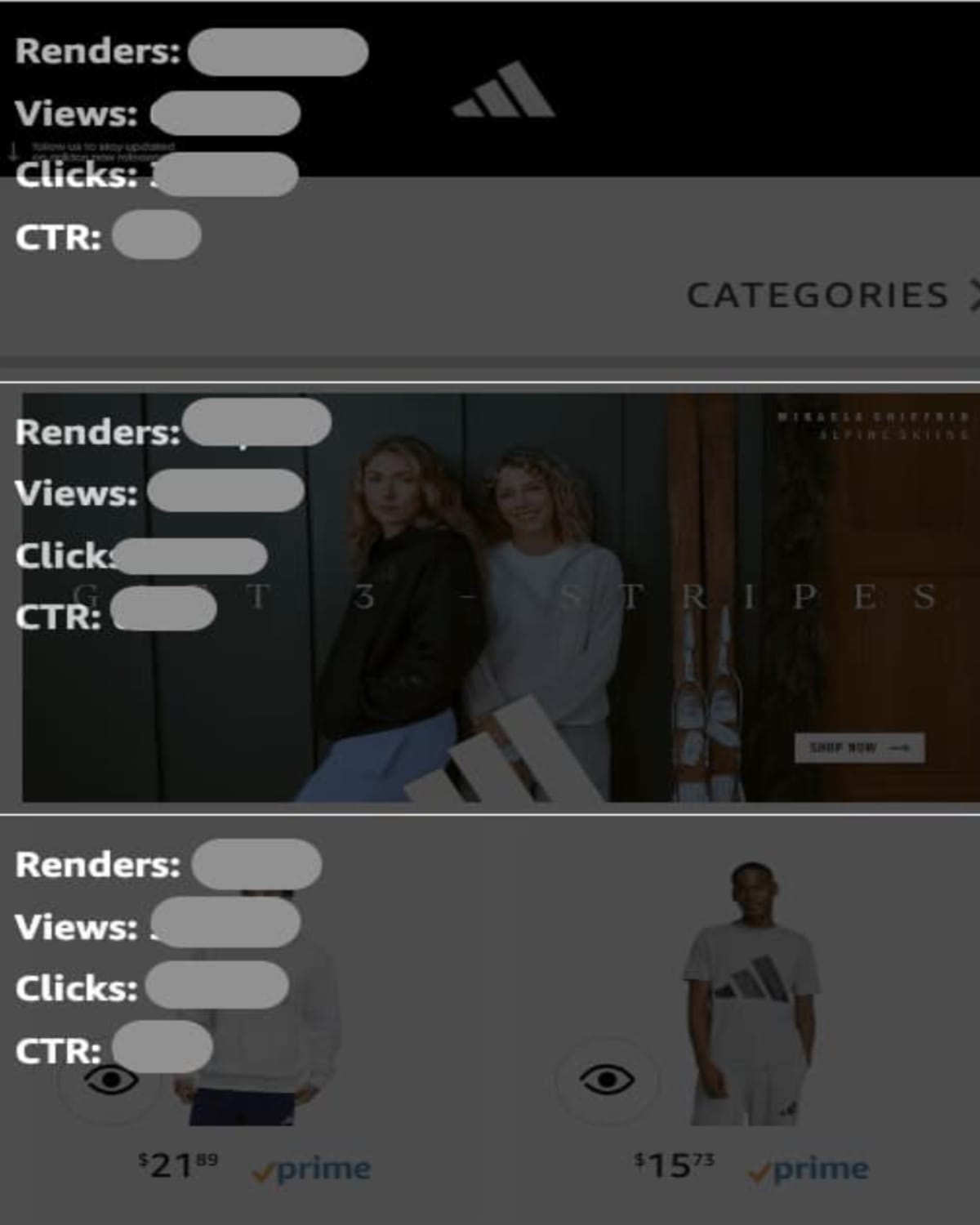
Amazon today rolled out section-level performance metrics for Brand Stores in beta, giving advertisers detailed engagement data for each component of their storefronts across different traffic sources. The capability makes metrics available starting January 10, 2026, according to the announcement.
The new Sectional Performance tab within the Brand Store insights dashboard delivers four key metrics for every section: renders, viewable impressions, clicks, and click-through rate. Advertisers can filter these measurements by traffic source, revealing how shoppers interact with specific content types depending on how they arrived at the store.
The launch extends Amazon's systematic expansion of Brand Store analytics capabilities throughout 2024 and 2025. Amazon added three Brand Store metrics in February 2024 through the insights dashboard: average bounce rate, average dwell time, and new-to-store visitors. Those metrics measure on-site engagement after visitors arrive, while the section-level data quantifies which content drives meaningful interaction.
Brand Stores function as dedicated storefronts within Amazon's marketplace where brands control layout, imagery, content hierarchy, and product organization across multiple categories. Unlike individual product detail pages, these properties enable brands to construct narrative shopping experiences with custom design elements, video content, shoppable images, and strategic product groupings. Section-level insights now reveal which of these components perform.
Advertisers gain visibility into the relationship between section placement, content type, and shopper behavior. A Brand Store might feature hero images, product carousels, video sections, category tiles, and promotional banners arranged across multiple pages. The new metrics identify which sections generate clicks and which fail to engage visitors from specific traffic sources.
This granularity matters because traffic sources behave differently. Shoppers arriving from Sponsored Brands advertisements may interact with Brand Store sections differently than those clicking through from Amazon DSP display campaigns or organic search results. Section-level metrics filtered by traffic source enable advertisers to customize store layouts based on acquisition channel.
The measurement arrives as Amazon replaced Brand Store quality ratings with sales-based scoring on December 12, 2025, abandoning engagement metrics for revenue attribution. That shift prioritized purchase outcomes over dwell time. Section-level insights complement sales-based ratings by revealing which store components contribute to conversion paths.
Amazon's internal data indicates high-quality stores generate up to 97% more sales than low-quality counterparts and 39% more sales compared to medium-quality stores during the period from July 5 through September 6, 2025. Section-level data helps advertisers achieve high-quality classifications by identifying underperforming content that requires optimization.
The Stores Analytics API now includes new endpoints for retrieving section-level performance metrics, according to technical documentation published alongside the announcement. API access enables programmatic reporting and integration with third-party advertising management platforms. Advertisers building custom dashboards or utilizing enterprise marketing analytics tools can incorporate section-level data alongside other performance indicators through standard reporting calls.
This API expansion follows Amazon's broader reporting infrastructure consolidation. The platform launched unified reporting on November 11, 2025, enabling advertisers to filter and combine data across ad products, accounts, countries, and supply and targeting combinations through the report builder UI, reporting API, and Amazon Marketing Stream.
Section-level metrics extend to 29 countries across six global regions. North America coverage spans the United States, Canada, and Mexico. South American availability currently includes Brazil. European markets encompass the United Kingdom, Germany, Spain, Italy, France, Belgium, Poland, Turkey, Netherlands, Sweden, and Ireland. Middle Eastern access covers United Arab Emirates, Saudi Arabia, and Egypt. Asia Pacific implementation reaches Australia, India, Japan, and Singapore. African availability currently includes South Africa.
Geographic availability matches recent Amazon Ads product launches targeting Brand Store optimization. Amazon added Brand Store page views metric for Sponsored Brands on November 3, 2025, with historical data extending to September 15. That metric quantifies traffic to Brand Stores specifically from Sponsored Brands advertisements, complementing section-level insights that reveal what shoppers do after arriving.
The measurement window for section-level metrics began January 10, 2026, providing no historical data for baseline comparisons. Advertisers implementing optimization strategies based on section-level insights will need to establish performance benchmarks over time rather than comparing current results against previous periods.
Renders represent the number of times a section loaded within a shopper's browser, regardless of whether it appeared within the visible viewport. This metric captures total section exposure including content that loads below the fold. Viewable impressions apply Media Rating Council standards, counting only sections that appeared within the visible browser window for the required duration. The distinction between renders and viewable impressions reveals how far shoppers scroll through Brand Store pages.
Click-through rate calculations divide section clicks by viewable impressions rather than total renders, focusing the metric on actively viewed content. This methodology prevents sections appearing far down the page from artificially depressing CTR calculations when shoppers never scroll to them.
Traffic source segmentation enables advertisers to identify content effectiveness across acquisition channels. A video section might generate strong engagement from Sponsored Brands traffic but fail to resonate with Amazon DSP display campaign visitors. Section-level metrics filtered by source reveal these patterns, informing content strategy decisions based on how different audiences arrive.
The beta designation signals ongoing development with potential refinements based on advertiser feedback. Current functionality focuses on engagement tracking, with the possibility of expanded metrics in future iterations connecting section-level interactions to downstream conversion behaviors.
Amazon's systematic measurement expansion throughout 2025 reflects industry-wide shifts toward granular performance attribution. The company enhanced branded search tracking across Amazon DSP and attribution platforms in October 2025 with improved matching logic capturing searches using abbreviations, descriptive terms, and spelling variations. That development addressed how campaigns influence shoppers to actively search for brands beyond immediate conversion actions.
The unified Campaign Manager platform launched on November 10, 2025 collapsed Amazon DSP and Ads Console into a single buying tool with AI-powered optimization features. Section-level Brand Store insights integrate within this consolidated infrastructure, enabling advertisers to analyze storefront performance alongside campaign metrics across sponsored ads and programmatic display formats.
Measurement standardization across Amazon's advertising ecosystem creates consistency in how metrics calculate and report. The platform implemented shopping-signal enhanced attribution methodology on January 1 affecting view-based campaign measurement across Sponsored Brands, Sponsored Display, and Amazon DSP formats. Section-level metrics operate independently of attribution methodology changes, tracking engagement behaviors rather than conversion credit assignment.
Retail media measurement capabilities have expanded substantially across the industry. Integral Ad Science earned MRC accreditation for third-party Amazon DSP measurement in November 2025, providing advertisers with independently verified impression counts, viewable impressions, and invalid traffic detection. Section-level Brand Store metrics complement third-party verification by revealing on-site engagement patterns after initial ad exposure.
The section-level capability addresses operational challenges advertisers face when optimizing Brand Store layouts without performance data. Previous iterations required advertisers to rely on aggregate store-level metrics showing overall engagement without identifying which specific sections drove results. This limitation forced broad optimization approaches rather than targeted section-level improvements.
Optimization workflows now incorporate section-level performance alongside existing Brand Store metrics. Advertisers can identify sections with high render counts but low viewable impressions, signaling placement below typical scroll depth. Sections generating strong viewable impressions but weak click-through rates indicate content that fails to engage despite visibility. High-performing sections provide templates for expanding similar content throughout stores.
The measurement framework supports testing methodologies where advertisers create multiple store versions with different section arrangements. Section-level metrics reveal which layouts generate superior engagement across traffic sources, informing decisions about permanent store structure. Amazon's Brand Store versioning capabilities enable A/B testing approaches with performance data guiding optimization directions.
Section types receiving granular measurement include hero images, product grids, video players, text blocks, image galleries, featured product sections, category navigation tiles, and promotional banners. Each component generates independent metrics enabling advertisers to assess content effectiveness based on format and positioning rather than overall store performance.
The beta launch timing aligns with Amazon's fourth quarter reporting period when Brand Store optimization significantly impacts sales performance. Holiday shopping seasons drive elevated traffic volumes, making section-level insights particularly valuable for identifying high-impact optimization opportunities during peak conversion windows.
Advertisers with Brand Stores across multiple countries can analyze section performance variations by market. A section arrangement performing well in the United States might generate different engagement patterns in European markets, informing localization strategies based on measured shopper behavior rather than assumptions about regional preferences.
Access requires no additional technical implementation beyond existing advertising console credentials. The Sectional Performance tab appears within the Brand Store insights dashboard alongside existing metrics including sales attribution, dwell time, bounce rate, and new-to-store visitors. The interface presents data through combinations of graphical representations and tabular formats.
The reporting structure enables date range selections for analyzing performance trends over time. Advertisers can compare section performance across different promotional periods, identifying how seasonal campaigns or product launches impact specific content engagement. Week-over-week and month-over-month comparisons reveal performance trajectories informing optimization priorities.
Multi-account management capabilities extend to section-level metrics. Agencies managing multiple client Brand Stores can access section performance data across advertiser accounts, identifying optimization patterns applicable to similar brands or product categories. This aggregated visibility supports strategic recommendations based on comparative performance analysis.
The measurement expansion occurs as retail media networks systematically improve analytics capabilities. Commerce media is projected to exceed $1.3 trillion by 2030, according to research examining maturity levels across industries. Granular measurement capabilities like section-level Brand Store insights represent infrastructure investments enabling networks to compete for advertiser budgets through data transparency.
Industry standardization efforts complement individual platform enhancements. IAB Europe released updated pan-European definitions on March 26, 2025, establishing consensus across the National Federation and IAB network throughout Europe. The framework addresses three distinct categories: on-site retail media, off-site retail media, and in-store digital retail media, with Brand Store metrics falling within on-site measurement standards.
The technical implementation through API endpoints enables integration with Amazon Marketing Cloud for advanced analysis. Advertisers can combine section-level engagement data with purchase behavior, customer demographics, and cross-channel exposure patterns within AMC's secure clean room environment. This analytical capability supports attribution modeling connecting specific Brand Store sections to downstream conversion outcomes.
The beta metrics complement existing Amazon measurement solutions including Amazon Attribution, Amazon Brand Lift, Amazon Marketing Stream, and Rapid Retail Analytics. Section-level insights specifically address the Brand Store optimization use case, filling measurement gaps between aggregate storefront metrics and individual product detail page performance.
Advertisers utilizing Amazon Marketing Stream can access section-level data through hourly updates, enabling near real-time optimization based on emerging performance patterns. The streaming service delivers data to partner or advertiser-owned AWS destinations without requiring repeated API calls throughout the day.
Who: Amazon Advertising launched the section-level insights capability for advertisers with Brand Stores across 29 countries spanning North America, South America, Europe, the Middle East, Asia Pacific, and Africa.
What: The beta feature provides detailed engagement metrics - renders, viewable impressions, clicks, and click-through rate - for each section of Brand Stores, segmented by traffic source. Advertisers access the data through the Sectional Performance tab in the Brand Store insights dashboard and the Stores Analytics API with new endpoints for programmatic reporting.
When: Amazon announced the feature on January 16, 2026, with metrics available starting January 10, 2026. Historical data does not extend prior to January 10.
Where: The capability launched across 29 markets including the United States, Canada, Mexico, Brazil, United Kingdom, Germany, Spain, Italy, France, Belgium, Poland, Turkey, Netherlands, Sweden, Ireland, United Arab Emirates, Saudi Arabia, Egypt, Australia, India, Japan, Singapore, and South Africa.
Why: Section-level metrics enable advertisers to optimize Brand Store layouts based on performance data showing which content types drive engagement across different traffic sources. The granular measurement reveals relationships between section placement, content format, and shopper behavior, helping advertisers create more effective storefronts that contribute to sales conversion.