Ad tech veteran slams IAB's 2026 agenda for abandoning publishers
Industry founder challenges Interactive Advertising Bureau to address existential revenue crisis facing digital media companies amid AI traffic collapse


Industry founder challenges Interactive Advertising Bureau to address existential revenue crisis facing digital media companies amid AI traffic collapse
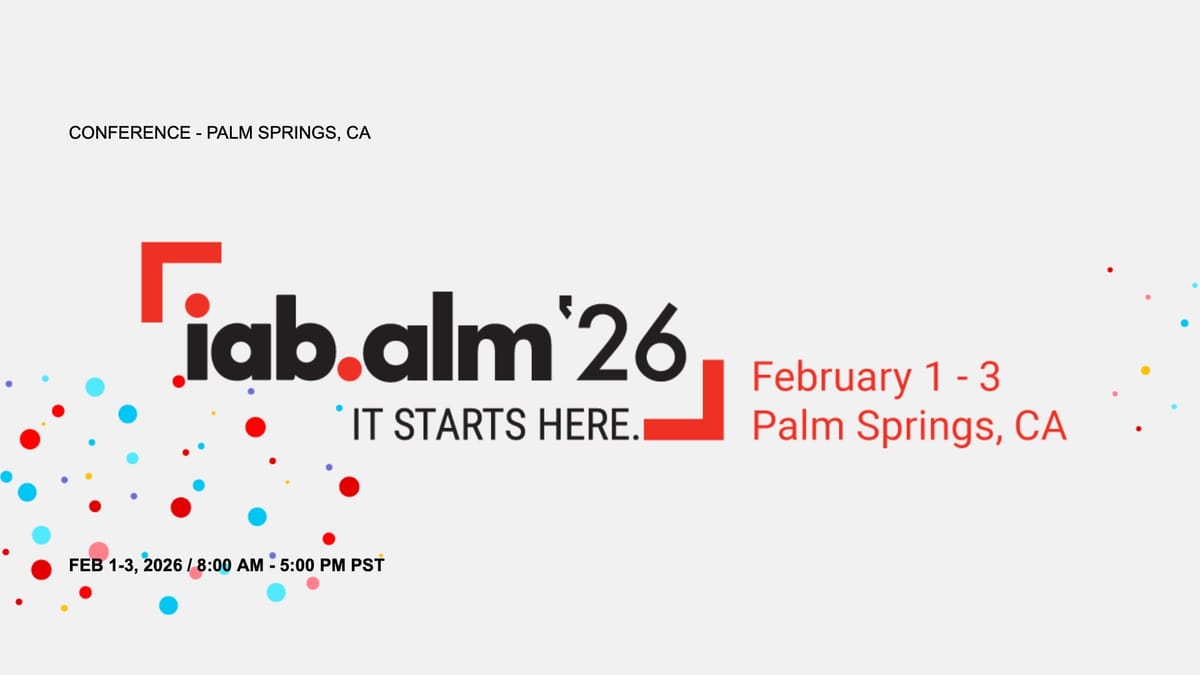
Duration Media CEO Andy Batkin challenged the Interactive Advertising Bureau on January 15 over its 2026 Annual Leadership Meeting agenda, arguing the organization has abandoned publishers during an existential revenue crisis. According to Batkin, who identified himself as a founding IAB member from 1996, the February 1-3 conference in Palm Desert features zero sessions dedicated to generating new publisher revenue.
"Here's what I DON'T see - A SINGLE session on helping publishers generate NEW revenue," Batkin wrote in a LinkedIn post that received 49 reactions from advertising industry professionals. The critique arrived three days before the conference begins, raising questions about the trade organization's priorities as publishers confront mounting traffic losses from artificial intelligence search features.
Batkin detailed specific challenges facing digital media companies. Ad impressions have declined 40% in some cases, while Google AI Overviews have reduced referral traffic substantially. According to Batkin, AI systems scrape content to answer queries while bypassing publisher sites entirely, threatening revenue models that sustained journalism and quality content creation for decades.
The IAB agenda demonstrates different priorities. According to the published schedule, the three-day conference includes sessions on AI agents, measurement frameworks, attribution methodologies, and marketing outcomes. The programming features celebrity appearances from Kevin Bacon, creator Remi Bader, and global AI advisor Zack Kass. Corporate executives from Google, Meta, Amazon, and Microsoft Advertising participate in panels addressing brand strategy, commerce media, and performance measurement.
Batkin emphasized the IAB's origins. "The IAB—an organization that was originally created to JUST serve publishers—is now dedicating ZERO sessions to solving this existential threat," he stated. The distinction matters because the Interactive Advertising Bureau launched in 1996 exclusively to support digital publishers before expanding its membership to include brands, agencies, and technology platforms.
The shift reflects broader industry changes. According to IAB Tech Lab research documented by PPC Land, digital advertising revenue concentration among the top 10 technology companies now reaches 80.8 percent, with companies ranked 11-25 holding 11.0 percent. This concentration squeezes independent publishers while AI companies valued at billions profit from using publisher content without compensation.
Batkin's professional background supports his critique. He founded Duration Media, an advertising technology company that builds solutions specifically for publishers. His career spans over three decades developing ad tech products for digital media companies. This expertise provides credibility to his assessment of publisher needs and industry support structures.
The measurement theme throughout the IAB agenda addresses advertiser concerns but ignores publisher economics. Multiple sessions examine attribution methodologies, incrementality testing, and return on ad spend calculation. Workshop B on February 1 covers "Publishing Through the AI Disruption" but focuses on traffic protection and Content Monetization Protocols rather than concrete revenue generation strategies.
Attribution challenges have intensified throughout 2025 as platforms modify measurement frameworks. Amazon implemented shopping-signal enhanced attribution on January 1, affecting view-based campaign measurement. Meta restricted attribution windows and imposed historical data retention limits effective January 12. These changes affect how advertisers evaluate publisher inventory value but provide no mechanisms for publishers to demonstrate performance independently.
The conference programming emphasizes brand perspectives. CMO panels feature executives from Nissan, Ally Financial, and General Motors discussing measurement approaches and AI integration. Publisher representatives appear primarily in defensive contexts—discussing how to protect traffic rather than how to expand revenue streams through new products or services.
Publisher revenue challenges extend beyond measurement disputes. Research documented by PPC Land shows AI Overviews reduce organic clicks by 34.5 percent when present in search results. Studies analyzing specific publisher experiences found even more dramatic impacts, with traffic declines reaching 90 percent for niche content sites.
The economic implications appear in financial disclosures. Dotdash Meredith reported during first quarter 2025 earnings that AI Overviews appear on roughly one-third of search results related to its content, with observable performance declines. CEO Neil Vogel characterized the impact as publishers seeing "a little performance decline on those pages," though the revenue effects compound across multiple traffic sources.
European regulators launched formal antitrust investigations on December 9, 2025, examining whether Google violated EU competition rules by using publisher content for AI purposes without appropriate compensation or viable opt-out mechanisms. The regulatory action demonstrates governmental recognition of publisher challenges that industry trade organizations have not prioritized in their programming.
Buy ads on PPC Land. PPC Land has standard and native ad formats via major DSPs and ad platforms like Google Ads. Via an auction CPM, you can reach industry professionals.
Batkin proposed direct action. "Let's show up at ALM. Let's not wait for the IAB to give REAL solution providers a stage—Let's create our own," he wrote, encouraging ad tech companies with actual publisher revenue solutions to contact him directly. The proposal suggests organizing an alternative venue during the conference to present actionable ideas publishers can implement immediately, particularly for first quarter revenue challenges.
The call for alternative programming reflects broader frustration. IAB Tech Lab established its Content Monetization Protocols working group on August 20, 2025, specifically addressing how AI-driven search threatens digital publishing economic sustainability. That initiative operates separately from the Annual Leadership Meeting programming and focuses on technical standards rather than business strategy.
Multiple industry figures commented on Batkin's LinkedIn post. Jason White, identifying himself as an AI innovator and former executive at CBS and Fox, supported the critique. Ruben Schreurs, Group CEO at Ebiquity, endorsed the concerns. The engagement demonstrates that publisher challenges resonate beyond media companies themselves to agency holding companies and independent consultants who work across the advertising ecosystem.
The IAB structured its conference with different access tiers. Complimentary passes are available for qualified brands and agencies. Member general passes cost $3,495, while non-member passes reach $4,495. This pricing structure prioritizes advertiser attendance over publisher participation, potentially contributing to agenda emphasis on brand and agency concerns rather than publisher revenue challenges.
Workshop A on February 1 carries an "Invite Only" designation for Brand Experience Pass Holders, covering "Human Connection In An AI World: Build Your New Brand Playbook Around Learning." The exclusive access for advertisers contrasts with Workshop B's focus on publisher challenges, which receives no special designation despite addressing what Batkin characterized as an existential threat to digital media companies.
The venue selection in Palm Desert, California, positions the conference as a high-level executive gathering rather than a working session addressing operational challenges. Previous Annual Leadership Meetings have served as networking opportunities and strategic alignment sessions rather than tactical problem-solving forums. This format may explain the agenda's emphasis on broad industry trends rather than specific constituency needs.
IAB Tech Lab released its Agentic RTB Framework version 1.0 for public comment on November 12, 2025, alongside promoting on-device artificial intelligence as a publisher-focused privacy solution. These technical specifications aim to help publishers maintain measurement capabilities and inventory value in programmatic environments, but they operate independently from the Annual Leadership Meeting agenda.
The technical work demonstrates that IAB organizations recognize publisher challenges. Content Monetization Protocols emerged following documented evidence that AI-driven search summaries reduce publisher traffic by 20-60 percent on average, with niche sites experiencing losses up to 90 percent. However, the technical standards development process operates on multi-month timelines while publishers face immediate revenue pressures.
Batkin's proposal for a webinar series addressing immediate publisher needs acknowledges this timing gap. "Let's also create a webinar series that provides a few actionable ideas that publishers can use right now," he wrote, emphasizing implementation speed over comprehensive technical solutions. The approach suggests that publishers require tactical revenue strategies they can deploy within weeks rather than framework discussions that might influence industry practices over quarters or years.
The conference agenda reflects advertiser priorities throughout its structure. Track sessions examine "Beyond Human: When AI Becomes Your Audience" from the perspective of marketers adapting targeting strategies rather than publishers monetizing AI agent traffic. "Commerce Unboxed" explores retail media opportunities for brands rather than how publishers can participate in commerce advertising revenue streams.
Main stage presentations feature brand chief marketing officers discussing performance expectations and measurement requirements. Jeremi Gorman, Chief Revenue Officer at Fanatics Advertising, appears on a panel about fandom and passion-driven communities, but the context positions her as representing advertiser access to audiences rather than publisher revenue strategies.
The "Storytelling Evolved" track addresses creator economy dynamics but focuses on brand collaboration with individual creators rather than how publishers can compete with or incorporate creator-driven content models into their business strategies. This framing suggests the IAB views creators as alternatives to publishers rather than as potential publisher partners or strategies.
The IAB's membership composition has shifted substantially since its 1996 founding. Current membership comprises over 700 companies including leading media companies, brands, agencies, and technology firms. This diverse membership creates competing priorities when developing conference agendas and establishing organizational focus areas.
Batkin's emphasis on the organization's publisher-exclusive origins highlights how membership expansion changed the trade group's mission. The IAB develops technical standards through IAB Tech Lab, conducts research on interactive advertising, and educates brands and agencies about digital marketing importance. Publishers remain members but share influence with constituencies that may have different or conflicting interests regarding issues like content licensing, traffic attribution, and revenue distribution.
The evolution mirrors broader digital advertising industry consolidation. Platform companies including Google, Meta, and Amazon dominate advertising technology infrastructure while also competing directly with independent publishers for advertiser budgets. The IAB's role facilitating collaboration across this ecosystem creates tensions when specific constituencies face existential challenges requiring advocacy rather than neutral convening.
Batkin's challenge to ad tech companies with "REAL solutions" suggests that revenue generation technologies exist but lack visibility or adoption support. His company Duration Media focuses on sustainable advertising technology, indicating that specialized solutions addressing specific publisher needs operate outside mainstream industry attention.
The call for solution providers to organize their own venue during the conference implies that existing IAB processes do not adequately surface innovations relevant to publishers. This structural limitation may reflect agenda development processes that prioritize broad industry trends over constituency-specific challenges, or it may indicate that publisher revenue solutions remain commercially immature compared to advertiser-focused products.
Publisher data challenges compound revenue difficulties. According to Wunderkind research, 84 percent of publishers can identify fewer than 25 percent of their website visitors. Just 12 percent of publishers report having strong first-party data and identity strategies in place. These technical limitations constrain publishers' ability to demonstrate audience value to advertisers, reducing their negotiating position in programmatic advertising markets.
IAB reduced its 2025 US advertising spend projection to 5.7 percent growth from 7.3 percent on September 25, 2025, citing tariff impacts and macroeconomic pressures. The downward revision affects publisher revenue expectations as advertiser budgets contract. First-half spending held steady at 7.0 percent growth, but second-half projections dropped to 5.0 percent, demonstrating weakening demand.
Customer acquisition dominated advertiser objectives in the revised outlook, with 64 percent identifying it as a top goal. Performance-driven media allocation increased as economic pressures intensified. These advertiser priorities disadvantage publishers whose inventory traditionally performs better for brand awareness objectives rather than direct response metrics.
The regulatory environment adds complexity. European data protection enforcement actions documented declining publisher revenues from increased AI content scraping and zero-click searches. IAB Europe released technical standards in September 2025 requiring AI platforms to compensate publishers for content ingestion, but implementation mechanisms remain unclear and enforcement capacity uncertain.
Subscribe PPC Land newsletter ✉️ for similar stories like this one
Subscribe PPC Land newsletter ✉️ for similar stories like this one
Who: Andy Batkin, founder and CEO of Duration Media and founding IAB member since 1996, challenged the Interactive Advertising Bureau's conference priorities. Industry professionals including Jason White, Ruben Schreurs, and multiple advertising executives endorsed his concerns through social media engagement.
What: Batkin criticized the IAB's 2026 Annual Leadership Meeting agenda for containing zero sessions addressing publisher revenue generation despite an industry crisis. The conference features sessions on AI agents, measurement frameworks, attribution, and marketing outcomes but lacks programming for publishers facing 40 percent impression declines and AI-driven traffic losses. Batkin proposed organizing alternative programming and webinar series to provide publishers with immediate actionable solutions.
When: The critique emerged on January 15, 2026, three days before the February 1-3 conference begins. The timing reflects mounting publisher challenges throughout 2025 as AI Overviews reduced organic traffic by 34.5 percent and Google Discover traffic patterns shifted dramatically.
Where: The IAB Annual Leadership Meeting occurs February 1-3 in Palm Desert, California, at the JW Marriott Desert Springs Resort. The three-day conference brings together executives from brands, agencies, publishers, platforms, and advertising technology companies. Batkin's critique circulated via LinkedIn, reaching advertising industry professionals globally.
Why: Publishers face existential revenue threats as artificial intelligence systems scrape content without compensation while reducing referral traffic through AI-generated search summaries. The IAB originated in 1996 to serve publishers exclusively but has expanded to represent diverse constituencies including brands and platforms whose interests may conflict with publisher needs. Conference agenda priorities reflect advertiser measurement concerns rather than publisher revenue generation strategies, prompting Batkin's call for alternative programming addressing immediate publisher challenges.